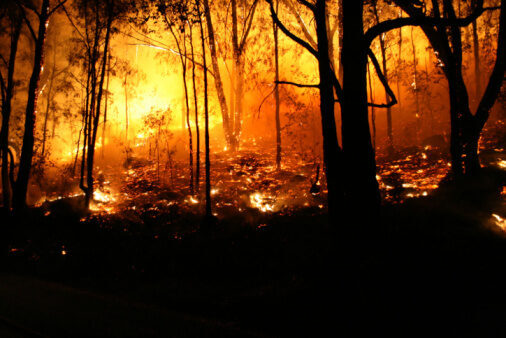
We’ve all seen a fire – a campfire or a bonfire, for example. But those are small, controlled fires. Then there are the giants: huge wildfires that burn through wild plants like woodland, bushes, grassland or jungle. These fires are hard to predict and hard to control. They’re especially common in places with hot, dry weather, like Australia, Greece, parts of Africa and parts of the USA such as California. They can destroy forests, homes far from towns, and farmland.
There are lots of possible causes. Wildfires can start naturally, when lightning strikes and sets dry plants and trees on fire. They can also be caused by people – for example, someone who didn’t put out a campfire properly. Sadly, sometimes fires are even started on purpose by someone who wants to cause harm 🙁.
Climate change doesn’t cause wildfires, but it does make them bigger and fiercer. That’s because a warmer planet has more severe droughts, which dry out the plants that feed the flames. All it takes is a spark – which can even come from sunlight shining through a piece of broken glass lying among dry plants.
Believe it or not, wildfires are actually part of an important natural cycle. Flames can kill insects and diseases that harm trees. Gentle fires burn up dead leaves and twigs on the ground, which helps return nutrients to the soil. Fires also make room for new, low plants – sunlight reaches the ground again, and the new plants become a valuable source of food and a new home for animals and birds.
Because burning the land now and then can be helpful, people who look after wild areas sometimes start controlled fires. These are carefully planned and watched so they don’t put anyone in danger. Controlled fires help prevent huge wildfires, because they burn up the dry brush and leaves that could fuel a surprise blaze. Australia often uses controlled burns to keep the landscape healthy, encourage new growth and reduce the number of giant fires that break out there.
Huge wildfires become dangerous when they get out of control and spread into towns and cities. The flames can burn through buildings, homes, cars and everything in their path. Breathing in the smoke can be harmful too. Windy, stormy weather can fan the flames and spread the fire faster. Luckily, many people – like firefighters – work very hard to learn how to prevent and control these fires. There are also lots of ways to stay safe during a fire, like planning an escape route that everyone at home knows (including little kids), and packing an emergency bag with basic supplies and medicine in case you need to leave quickly.
Israel has had several major fires – on Mount Carmel, in the Jerusalem Forest and at Sha’ar HaGai – that burned large areas and destroyed property. In 2010, a fire broke out on Mount Carmel near Haifa. It’s known as the “Carmel disaster,” because 44 people lost their lives.
The fire lasted 4 days, and about 17,000 people had to leave their homes. On the first day, about 400 firefighters and 100 fire trucks fought the blaze. It quickly became clear there weren’t enough fire trucks and equipment for such a huge fire, so Israel asked other countries for help. Firefighters battled the flames from the ground and from the air. Dozens of planes dropped about 9,000 tons of water. Two large Russian firefighting planes called Ilyushins joined in, scooping water straight from the sea and dropping it on the fire, until the blaze was finally brought under control.