1) Hurricanes are huge tropical storms that bring heavy rain and strong, sometimes destructive winds.
2) Hurricanes form over warm ocean water near the equator. Warm, moist air above the ocean rises, which pulls in air from the areas around it. That “new” air warms up, gets moist and rises too, starting a cycle that builds clouds. The clouds then spin along with the Earth’s rotation. If there’s enough warm water, the process keeps going and going – and a hurricane is born!
3) Hurricanes spin around an area called the eye of the storm – a circle in the middle of the storm that can be tens of kilometers wide. The eye is calm, with no clouds, quiet air and even sunshine. Around the eye is the “eyewall” – a wall of clouds rising up and circling the eye. This is the dangerous part! Strong winds rage, the clouds are extra thick and the rain is heavy! The worst wind damage happens when the eyewall passes over land.
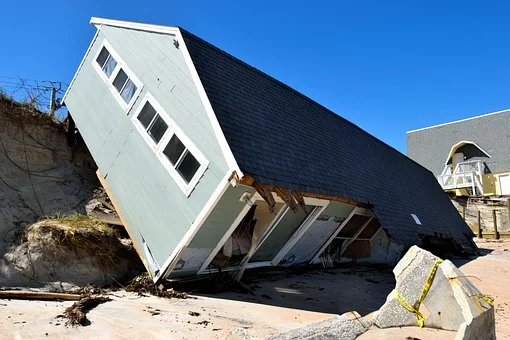
4) Most hurricanes happen out over the oceans without hurting anyone. But when they move toward land, they can be very dangerous – damaging buildings, wrecking whole neighborhoods and putting lives at risk.
5) A hurricane’s powerful spiraling winds can reach up to 320 km/h (200 mph) – strong enough to tear up whole trees and destroy buildings!
6) In the Southern Hemisphere, hurricanes spin clockwise, and in the Northern Hemisphere they spin counterclockwise. This happens because of something called the Coriolis effect, caused by the Earth’s rotation.
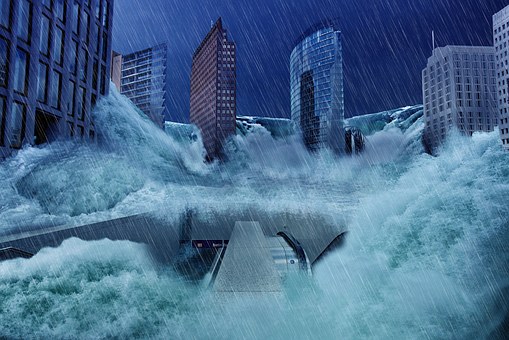
7) When a hurricane reaches land, it often causes a “storm surge.” The strong winds push the sea toward the shore, raising the water level and creating huge crashing waves. Storm surges can be up to 6 meters high and stretch for more than 150 km! They can flood buildings and roads very quickly, which makes them extremely dangerous.
8) Hurricanes are also called cyclones or typhoons, depending on where they happen. In the Atlantic and the northeast Pacific they’re hurricanes, in the northwest Pacific they’re typhoons, and in the South Pacific and Indian Ocean they’re cyclones.
9) The biggest storm ever recorded was Typhoon Tip, in 1979 in the northwest Pacific. At about 2,220 km across, it was almost half the width of the United States!
10) Hurricanes are named by the World Meteorological Organization (WMO) so people can tell them apart. Every year, tropical storms get names in alphabetical order from a list the organization prepares – names like Irene, Gustav and Dean. The storm keeps its name if it grows into a hurricane. The lists are reused every six years.